
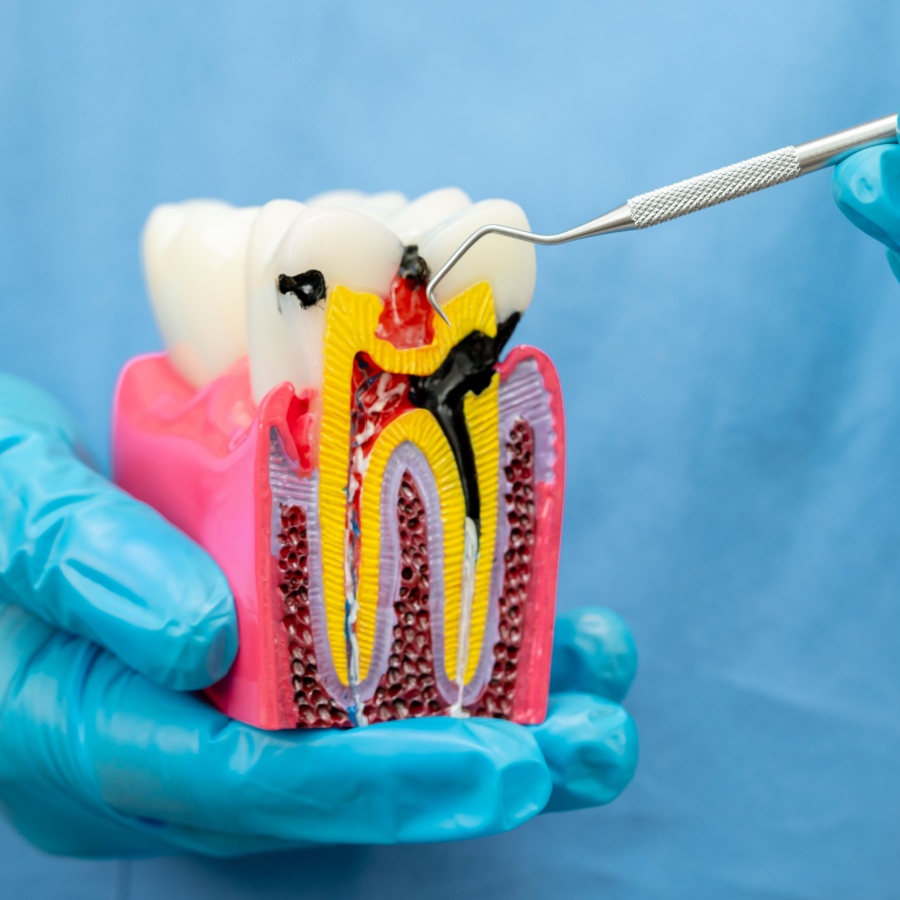
Root canal treatment is one of the most misunderstood dental procedures, with so many people harbouring fears or misconceptions about the process.
If you need a root canal treatment, it’s easy to let these misconceptions cloud your thinking. This could make you far more anxious about the procedure.
Despite its reputation, root canal treatments are a standard and essential treatment designed to save a tooth that would otherwise be lost to infection or decay.
To set the record straight, here are eight common myths about root canal treatments, debunked.
Root Canal Myths & Facts You Should Know
Myth 1: Root Canal Treatment Is Painful
One of the most common myths is that root canal treatment is excruciating. While you may experience some discomfort following the procedure, it’s typically no more painful than having a routine filling.
In reality, you will probably be experiencing a high level of pain before your procedure. A root canal treatment will alleviate this pain.
We’ll give you a local anaesthetic before the procedure begins. Advances in dental technology and techniques make the treatment more comfortable than ever.
Myth 2: Root Canal Treatment Can Lead to Illness
Another myth is that root canal treatments can cause systemic health problems or even lead to serious illness. Numerous studies have shown that root canal treatment is safe and doesn’t contribute to heart disease or cancer.
Root canal treatments remove infected tissue from inside the tooth, preventing the spread of bacteria that could lead to further infection. The infection may spread if you don’t receive treatment, potentially causing serious health concerns.
Myth 3: Root Canal Treatment Is Only for Extremely Damaged Teeth
Many people assume that root canal treatment is reserved for teeth that are severely decayed or damaged. Although this is sometimes true, the procedure can also be performed on teeth with minor damage but at risk of infection.
Root canal treatments can save a tooth if the infection is contained. The earlier root canal treatment is performed, the better the chance of saving the tooth and preventing more extensive damage.
Myth 4: Root Canal Treatment Will Make the Tooth Weak
You may worry that a tooth that’s undergone a root canal will become weak. However, after treatment, your tooth may need to be restored with a crown, providing strength and protection.
The treatment removes the infected pulp, but the tooth’s outer structure remains intact.
Once the root canal is completed and the tooth is properly restored, it can continue functioning like any other tooth for many years.
Myth 5: You Only Need a Root Canal If the Tooth Hurts
While pain is one of the common signs that a root canal may be necessary, it’s not the only symptom.
A tooth can become infected or damaged without causing noticeable pain, especially in the early stages. In some cases, a tooth can be seriously infected without any discomfort. This is why regular dental check-ups are essential for spotting issues before they become serious.
Symptoms like sensitivity to hot or cold, swelling in the gums, or discolouration of the tooth may mean you need a root canal.
Myth 6: Root Canal Treatment Is a Complicated Procedure
Another common myth is that root canal treatments are complex and time-consuming. In truth, modern techniques and technology significantly simplify the process, making it faster and more efficient.
Most root canal treatments can be completed in one visit, depending on the severity of the infection and the location of the tooth.
Myth 7: A Root Canal Will Only Last for a Few Years
Some people believe that a root canal-treated tooth will only last a short time before it needs to be extracted or further treatment. This is not the case. A root canal-treated tooth can last for many years.
Myth 8: Tooth Extraction Is a Better Option Than Root Canal
It’s easy to think that extracting a damaged or infected tooth is more straightforward than a root canal treatment. While extraction may seem like an easier option, it comes with downsides.
First, tooth extraction can lead to alignment problems, as adjacent teeth may shift to fill the gap. Additionally, you will need to replace the missing tooth with an implant, bridge, or denture, which can be costly and require further procedures.
A root canal, on the other hand, allows you to preserve your natural tooth. Keeping your natural teeth is better for the aesthetics of your smile, the function of your bite, and your long-term oral health.
Root Canal Treatment In London
Root canal treatment is often misunderstood, but it’s safe, effective, and necessary to save a damaged or infected tooth. We hope to ease any concerns about the treatment by debunking these common myths.